Guide

How a green vanilla bean becomes aromatic

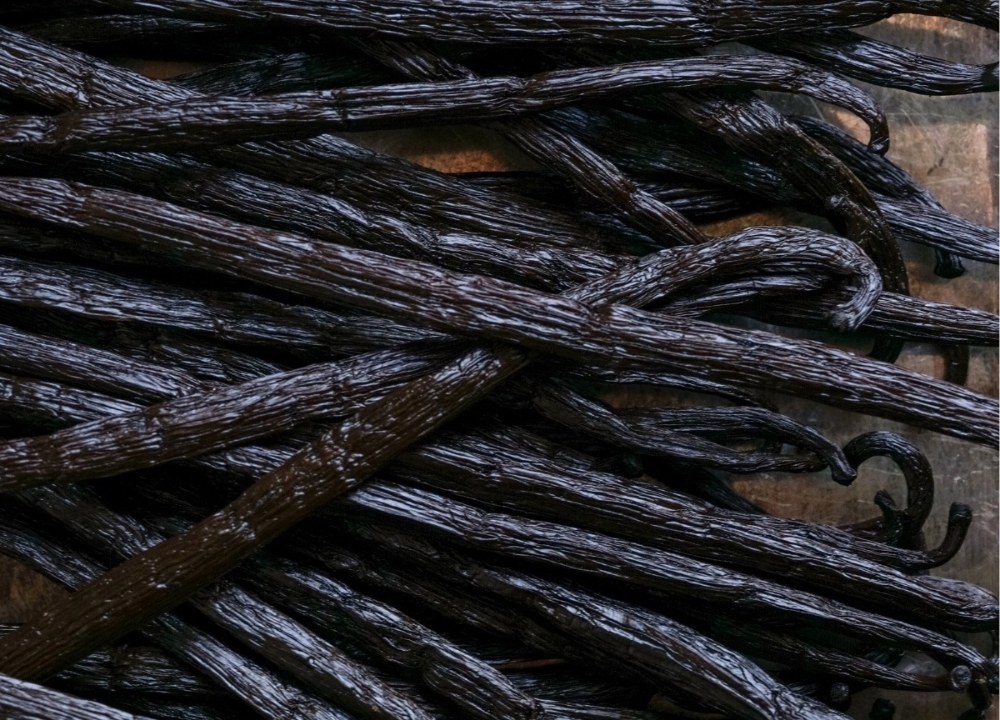
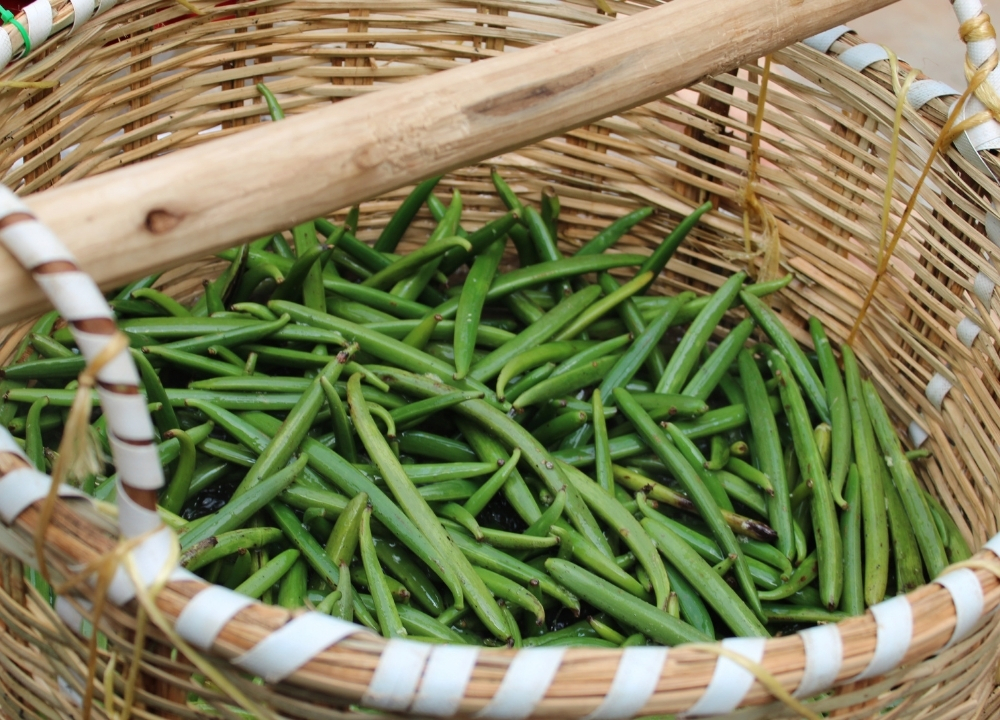
Harvested while still green, the vanilla bean has almost no aroma. It contains precursors whose expression will depend on maturity at harvest, climatic conditions, curing practices and conditioning time. Several months pass between harvest and the black, supple, fragrant bean.

A bean harvested before full maturity

At harvest, the fruit has almost no perceptible aroma. It mainly contains aroma precursors, including glucovanillin, which have not yet been converted into odorant compounds.


Physiological maturity plays a decisive role: a bean harvested too early or too late will not develop the same aromatic potential. Harvesting is therefore a first, decisive step that determines the final quality of the product.

The seven steps of the Bourbon curing process, set along a vanilla bean that turns from green to black: killing, sweating, sun drying, shade drying, conditioning, grading and packing.
The seven steps of the Bourbon process. Sources: STABEX, 1999; Dunphy & Bala, 2015; Odoux, 2004; Eurovanille R&D / Purchasing, 2026. © Eurovanille
  1. Killing
  2. Sweating
  3. Sun drying
  4. Shade drying
  5. Conditioning
  6. Grading
  7. Packing

The steps of Bourbon curing

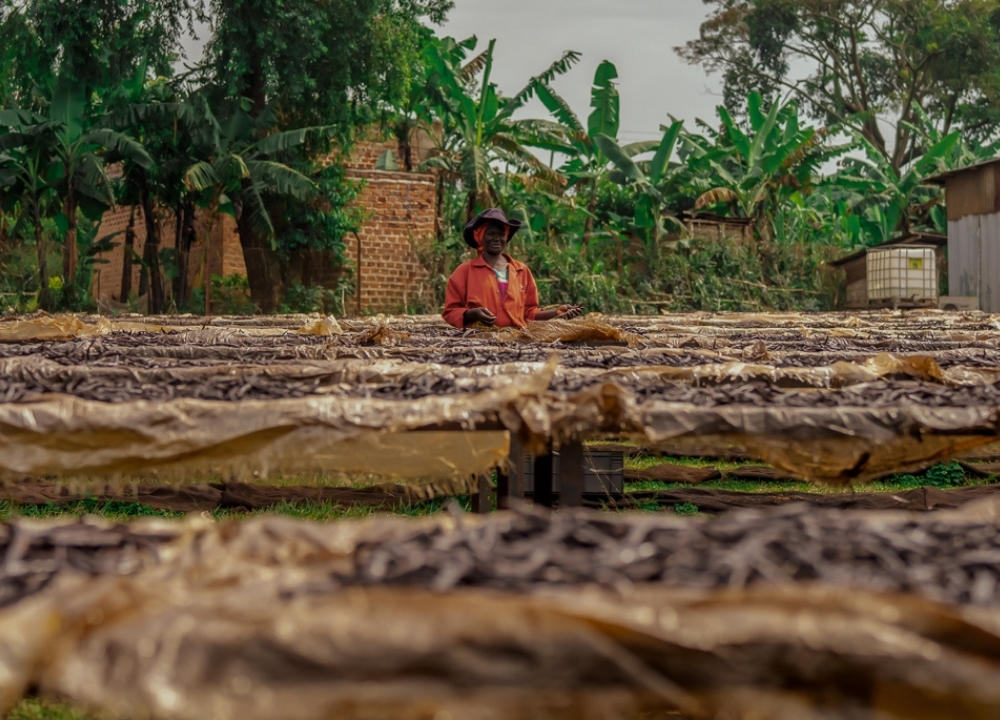
Processing, known as curing, relies on a series of steps designed to reveal and structure the aroma profile while keeping the bean from splitting.


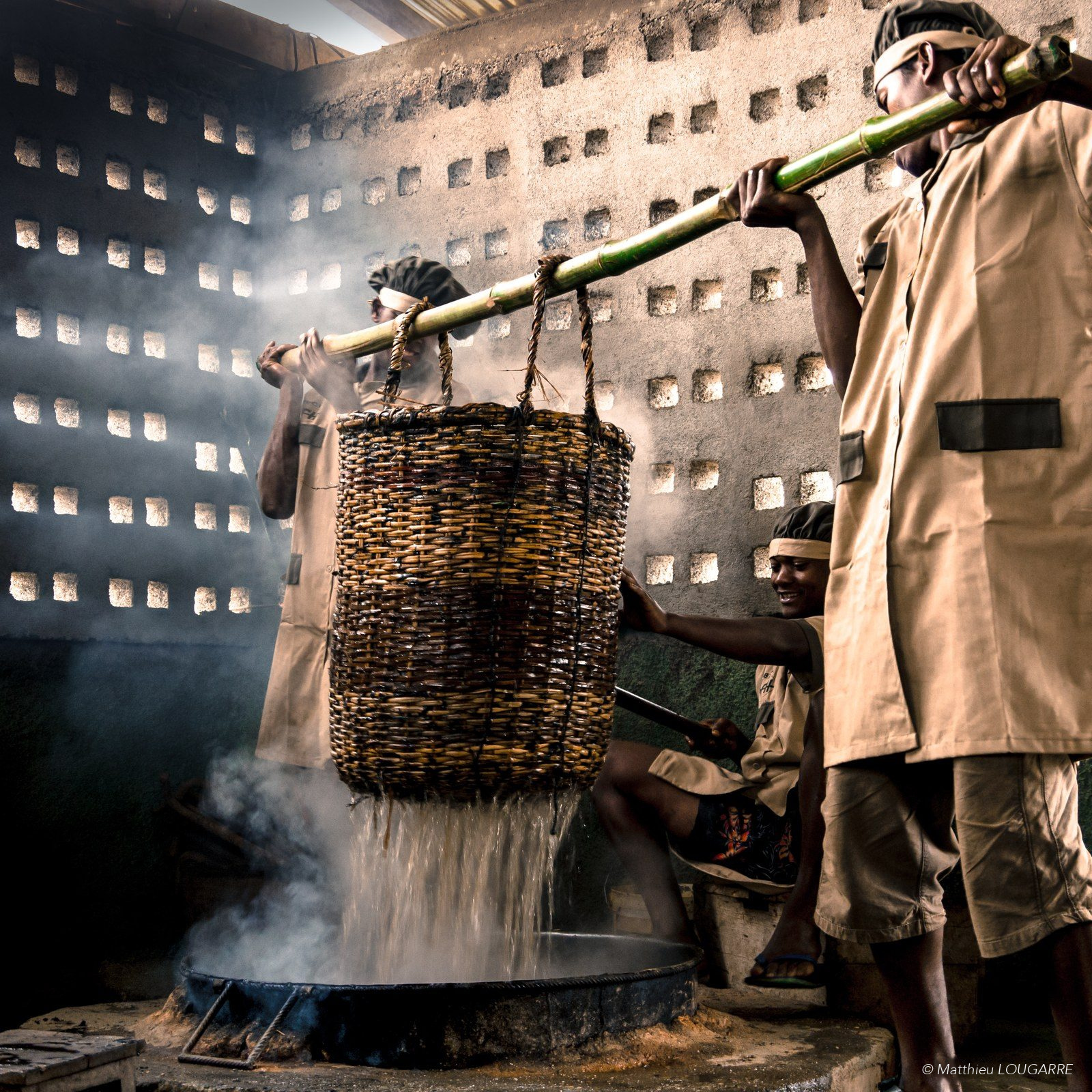
Killing consists of immersing the beans for one to three minutes in water heated to 140 to 176 °F (60 to 80 °C). While still hot, they move on to sweating, in a box, for twenty-four to seventy-two hours. Drying follows, alternating sun and shade, for a total of about two months depending on the weather. Conditioning then continues in wooden boxes until shipment. Grading, by moisture, color and quality and then by length to the nearest centimeter (about 0.4 in), and packing complete the process.


The whole process takes several months and relies on a fine balance between technical skill and environmental conditions.

Three workers lift a wicker basket of vanilla beans out of a steaming hot-water tank during killing, the first step of curing.
Killing: the green beans are immersed in hot water for one to three minutes. © Matthieu LOUGARRE

Two invisible parameters: price and climate

Quality does not depend on expertise alone. When market prices are high, the risk of theft increases and beans are sometimes harvested earlier, before they are fully ripe, at the cost of reduced aromatic potential.


Pronounced rainy seasons also make drying difficult in the growing areas. Beans may then be moved to drier regions, but drying that is too fast upsets aroma development.


These parameters, rarely visible from further down the supply chain, have a direct impact on final quality.

What the White Paper adds

  • The full diagram of the seven steps of the Bourbon process, with the parameters for each.
  • The Polynesian method and what sets it apart from the Bourbon method.
  • The analysis of price and climate factors and their effects on quality.

Blog

Recent Articles

Stay up to date with the latest from Eurovanille and share our love of exceptional vanilla!

  • All Posts
  • Agronomy R&D
  • CSR
  • Innovation
  • Tips & Advice
  • Trade Shows