Long before it became a spice traded worldwide, vanilla was a tropical vine native to Central America, used by Mesoamerican civilizations, notably to flavor cocoa-based drinks. It held a place that was at once culinary, ritual and symbolic.
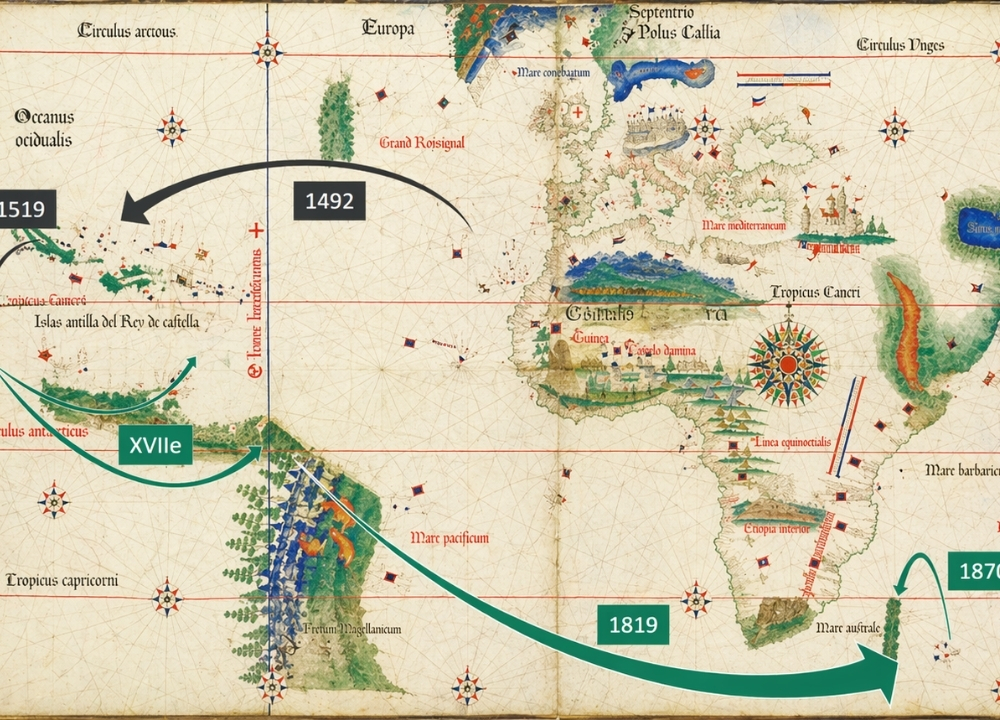
For a long time its cultivation remained concentrated in this region, as the conditions for its natural pollination, provided by certain native insects such as Melipona bees, could not be reproduced elsewhere. Introduced to Europe in the 16th century following the Spanish expeditions, it was first consumed with cocoa. But although the vine grew and flowered in new territories, it did not bear fruit.
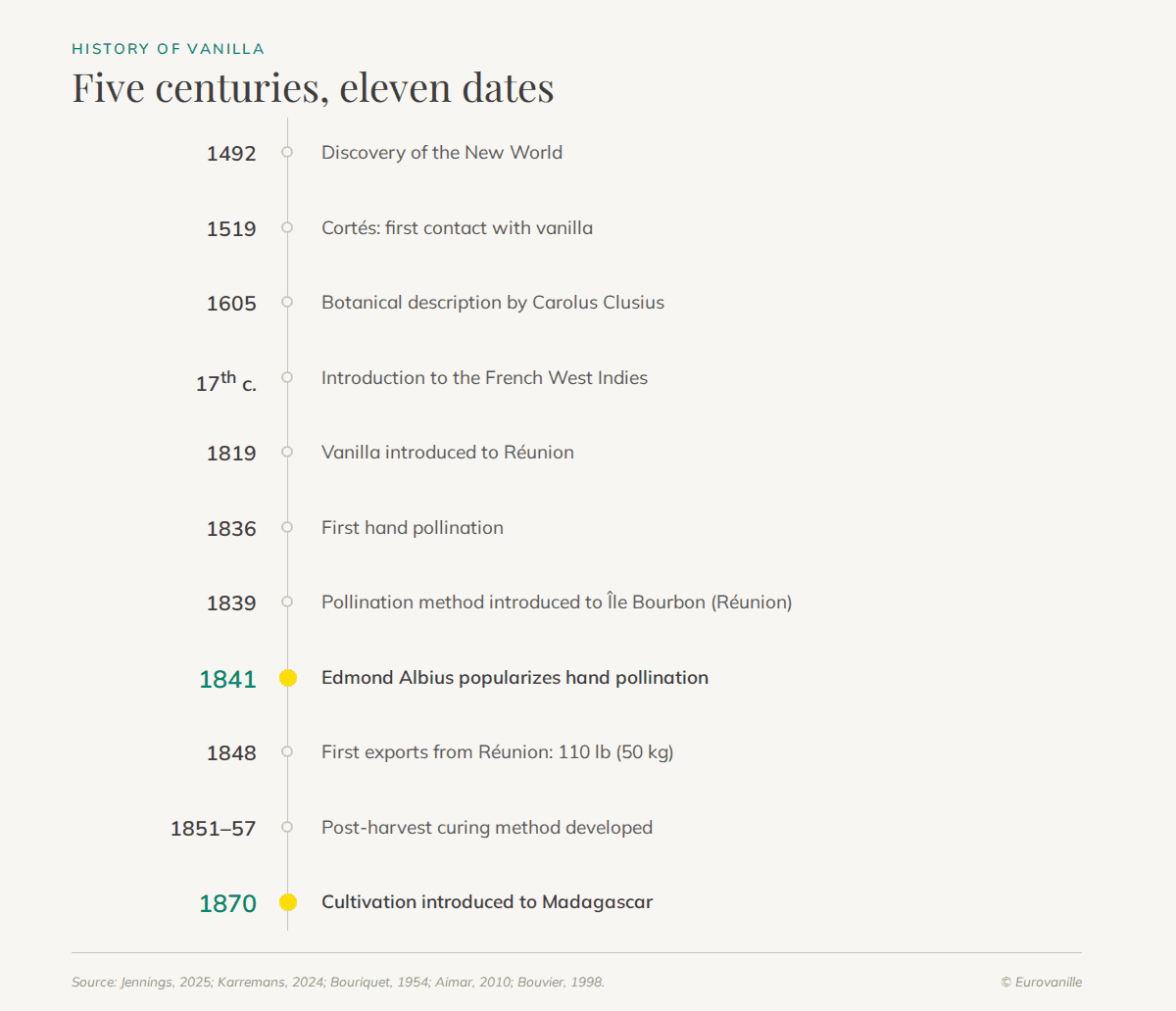
The turning point came in the 19th century. Although the botanist Charles Morren identified the principle of artificial pollination of the vanilla vine as early as the 1830s, it was in 1841, on Réunion Island, that Edmond Albius developed a simple, reproducible technique for pollinating the flower by hand.
This innovation ended the exclusive dependence on the Mesoamerican ecosystem and made it possible to grow vanilla in other tropical regions. It proved a decisive lever for the development of the sector worldwide.
Beyond its agronomic impact, it turned vanilla into an agricultural product that could be grown and exploited on a large scale. The first export from Réunion, in 1848, weighed just 110 lb (50 kg).
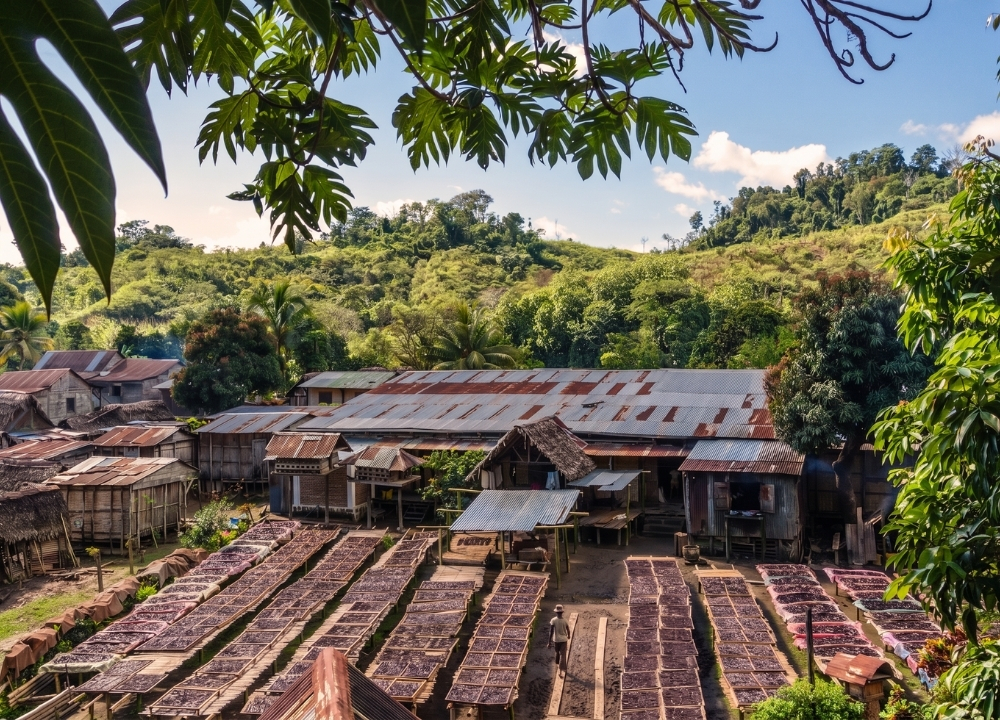
From the second half of the 19th century, commercial cultivation developed first in Réunion, before spreading to the West Indies, then to Madagascar and the wider Indian Ocean, where the climate proved particularly well suited.
Within a few decades, Madagascar established itself as the world’s leading production center. The SAVA region (Sambava, Antalaha, Vohémar, Andapa) became the cornerstone of the sector.