You are currently viewing The four pillars of a sustainable vanilla supply chain
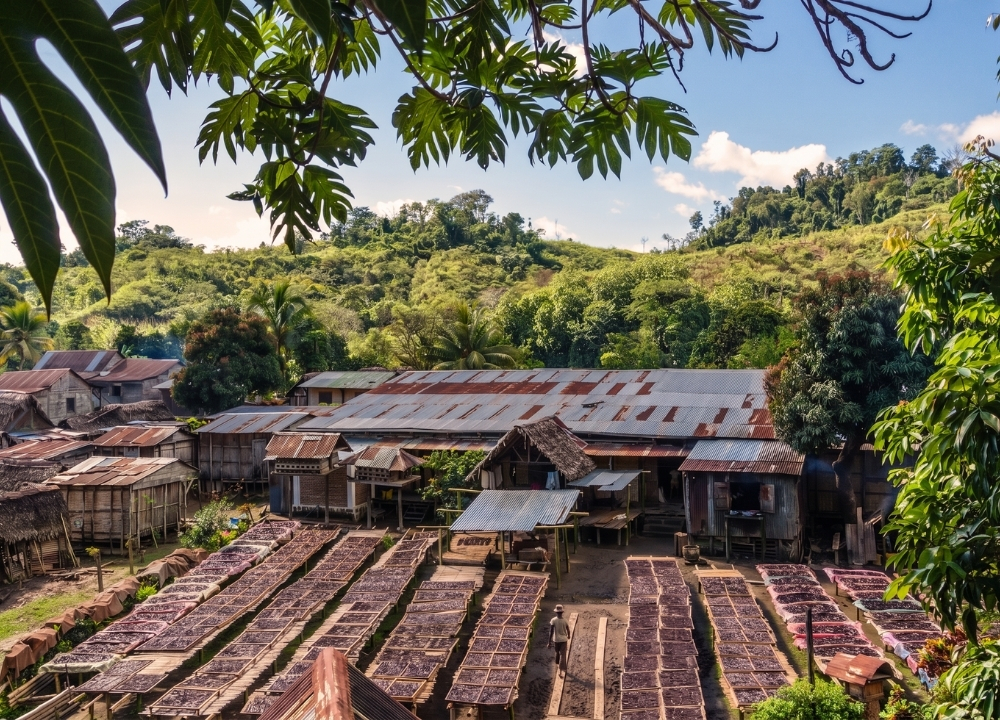
Un village producteur à Madagascar.

The four pillars of a sustainable vanilla supply chain

Commitment

The four pillars of a sustainable vanilla supply chain

The sustainability of a sector as sensitive as vanilla is built over the long term, from grower to consumer. Four complementary and interdependent pillars structure this approach: economic, social, environmental and governance.

Four inseparable pillars

  • The economic pillar aims to ensure stable, fair income for growers, secure markets and affordable prices.
  • The social pillar focuses on improving living conditions, supporting training and passing on farming know-how.
  • The environmental pillar is about protecting ecosystems and limiting the impact of farming and transport on biodiversity.
  • The governance pillar strengthens traceability, structures supply chains and builds shared frameworks of trust, while preventing ethical risks: child labor, corruption, abusive practices.
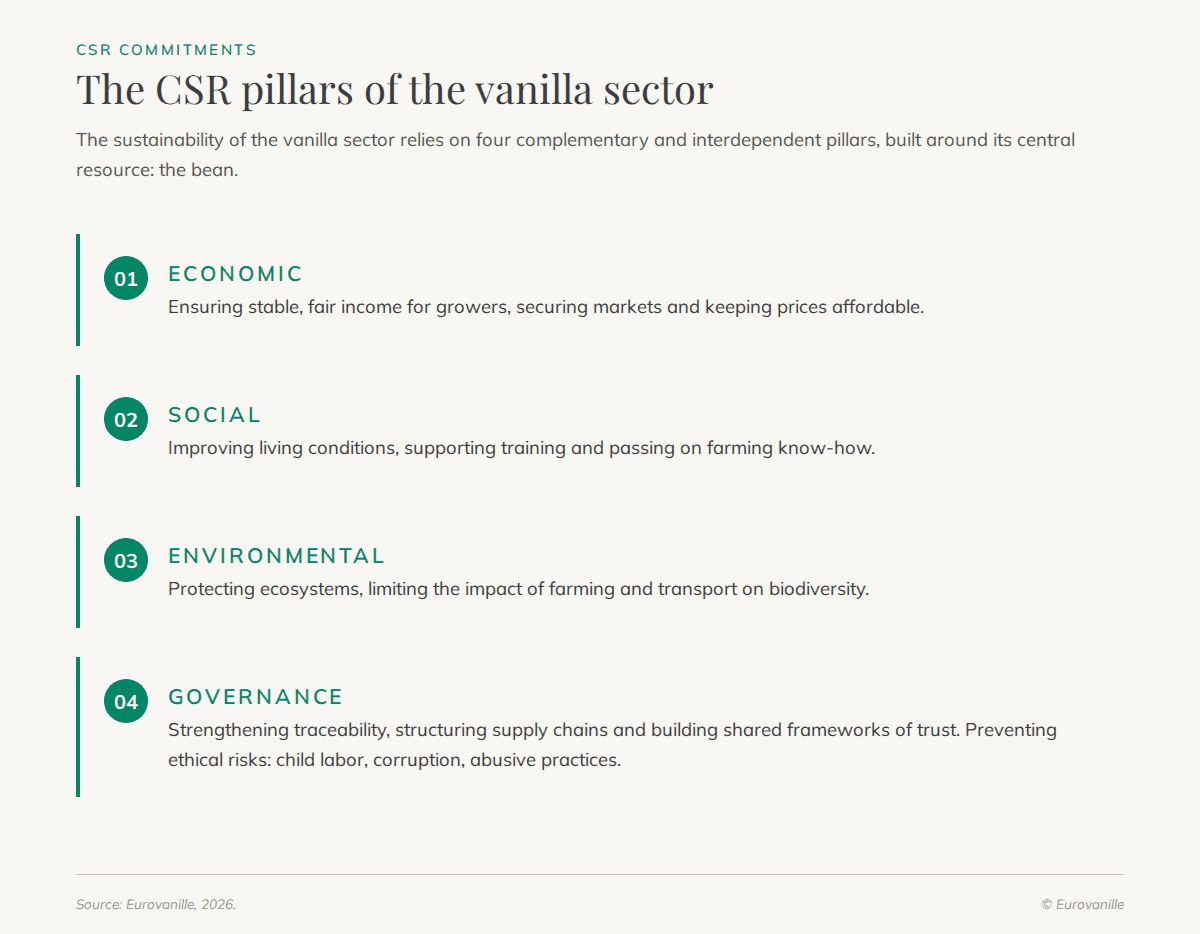
Diagram of the four CSR pillars of the vanilla sector. Economic: ensuring stable, fair income for growers, securing markets and keeping prices affordable. Social: improving living conditions, supporting training and passing on farming know-how. Environmental: protecting ecosystems and limiting the impact of farming and transport on biodiversity. Governance: strengthening traceability, structuring supply chains, building shared frameworks of trust and preventing ethical risks.
The four CSR pillars of the vanilla sector. Source: Eurovanille, 2026

None of them works in isolation: their interdependence makes corporate responsibility a lever of resilience for the whole sector.

A sector with high local added value

The vanilla sector has a distinctive structural feature: growing and curing the beans, including killing and drying, take place mostly in the countries of origin. This setup brings more income to those regions.

It also leaves them more exposed to swings in production and price, hence the importance of long-term partnerships offering multi-year visibility on volumes and technical support.
GPS traceability of every plot, payments solely by bank transfer with no cash, direct relationships with suppliers with no intermediary, audited by senior management during buying trips.

Diversifying beyond vanilla

Every year, more than 120 metric tons of vanilla are sourced from several origins, securing volumes and quality while making the most of the diversity of terroirs and varieties.

COMPLEMENTARY CROPS

MADAGASCAR
Clove · Cinnamon · Beekeeping

UGANDA

Cocoa · Coffee · Avocado · Mango

Crop diversification supplements income beyond vanilla alone: clove, cinnamon and beekeeping in Madagascar; cocoa, coffee, avocado and mango in Uganda.

This approach is part of the United Nations Global Compact and Sustainable Development Goal 12, through a Responsible Purchasing Policy applied to all suppliers.

WHAT THE WHITE PAPER ADDS

  • Details of the programs run in each origin, in Madagascar and Uganda: agroforestry, reforestation, education, women’s financial independence.
  • The EcoVadis Gold Medal awarded in August 2026, with a link to Eurovanille’s CSR Report.
  • An overview of the certifications and standards in the sector, from organic to clean label.

Blog

Recent Articles

Stay up to date with the latest from Eurovanille and share our love of exceptional vanilla!

  • All Posts
  • Agronomy R&D
  • CSR
  • Innovation
  • Tips & Advice
  • Trade Shows
Load More

End of Content.