Key facts

Whole bean or extract: what to choose for industry

Processing vanilla means turning a living, variable raw material into ingredients that meet the requirements of the food industry. Each form reflects a different level of processing, and a trade-off between aromatic intensity, ease of use, consistency, cost and technical performance.

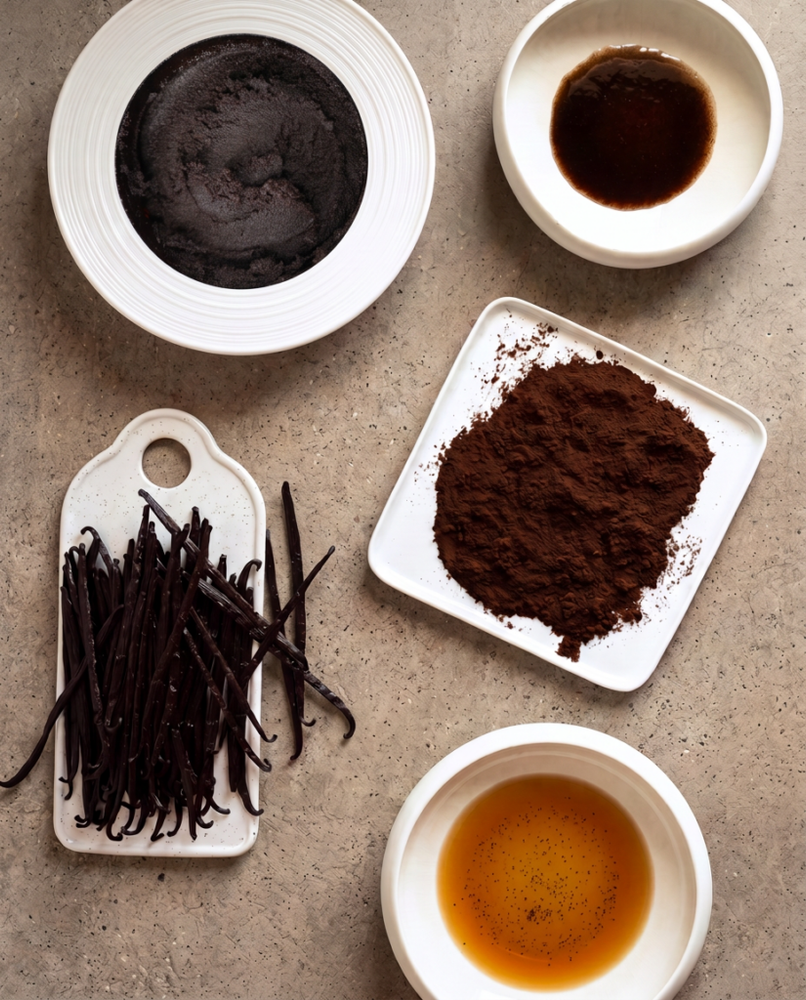
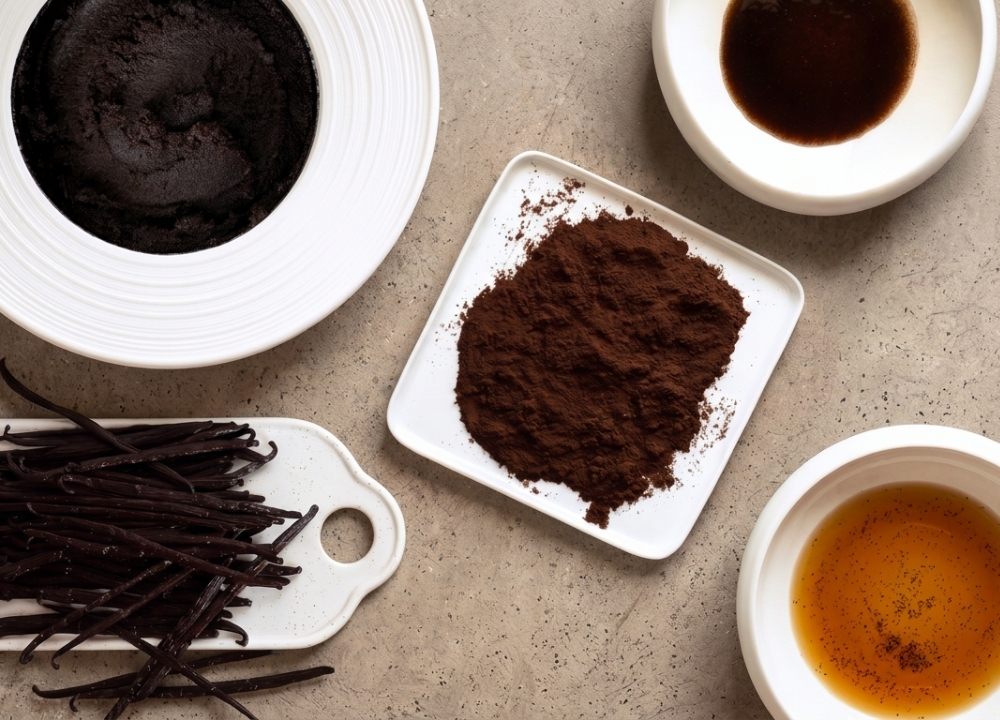
Gousses de vanille, poudre, vanille broyée et extrait présentés dans des coupelles blanches, vus de dessus.

Three families, three logics

  • Raw or minimally processed forms (whole beans, ground beans, powders, bean pieces) keep a direct link with the plant raw material. They bring a strong visual, textural and aromatic dimension, but require preparation or infusion time.
  • Extracted forms (extracts, infusions, pastes) turn the bean into ingredients that are easier to dose and incorporate. They deliver the aromatic richness of vanilla while improving convenience, consistency and suitability for food matrices.
  • Flavor forms (natural flavors, fermentation-derived flavors, artificial flavors) follow other logics: targeted intensity, cost control, reproducibility. They do not always match the complexity of a bean, but play an essential role in many applications.

Taste alone does not decide

In industrial formulations, vanilla cannot be seen merely as a taste marker. It must withstand processing, blend into a variety of matrices, remain stable over time and deliver consistent quality.

Choosing a vanilla ingredient therefore depends as much on the desired profile as on production constraints, processing and expected performance.

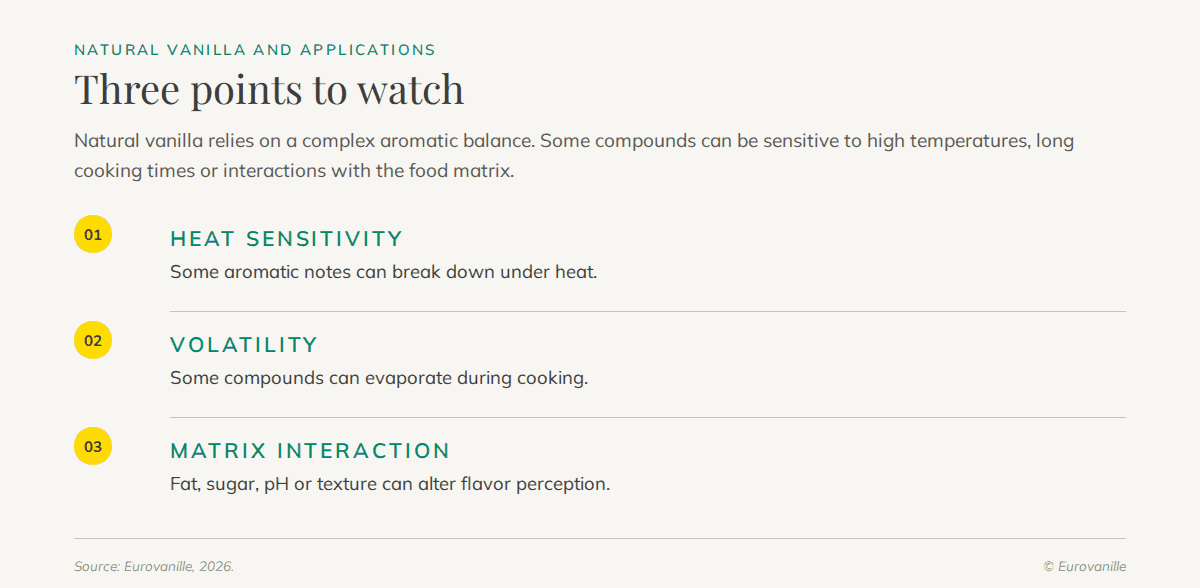
Three points to watch for natural vanilla in application. Heat sensitivity: some aromatic notes can break down under heat. Volatility: some compounds can evaporate during cooking. Matrix interaction: fat, sugar, pH or texture can alter flavor perception.
Three points to watch in application. Source: Eurovanille, 2026

The same vanilla, several names

The same vanilla can carry very different names depending on the composition of its flavoring part and the target market. In Europe, Regulation (EC) No 1334/2008 governs the sales names of flavourings; in the United States, the Code of Federal Regulations follows its own system.

This is a major point of attention for exporting companies, and a recurring source of misunderstanding in international trade.

ORDER OF MAGNITUDE: GLOBAL PRODUCTION

24,840 t/yr
Vanilla-flavored molecules produced worldwide
vs.
40 t/yr
From vanilla beans (0.16%)
This order of magnitude puts the subject in perspective: global production of vanilla-flavored molecules reaches 24,840 metric tons per year, of which only 40 metric tons come from vanilla beans.
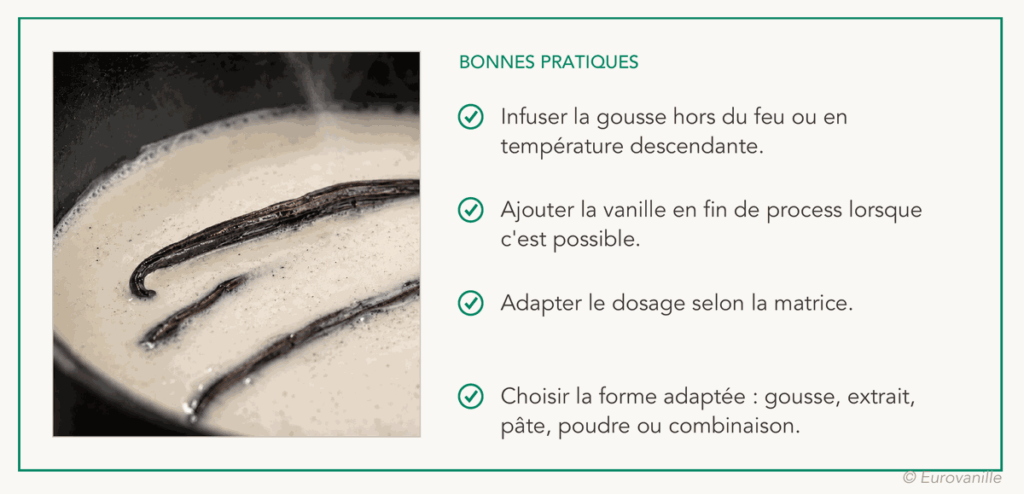
Infographie des bonnes pratiques d'utilisation de la vanille en application, illustrée d'une gousse infusant dans du lait.

WHAT THE WHITE PAPER ADDS

  • The full comparative overview of forms, with intensity, complexity, consistency and cost.
  • The EU / US regulatory table, name by name: page 31.
  • The Vanifolia ranges and how they map to each level of processing.

Blog

Recent Articles

Stay up to date with the latest from Eurovanille and share our love of exceptional vanilla!

  • All Posts
  • Agronomy R&D
  • CSR
  • Innovation
  • Tips & Advice
  • Trade Shows
Load More

End of Content.