Faced with sustained global demand, naturally unstable production and growing climate constraints, the vanilla sector is entering a new stage....
Home » Resources » Understanding vanilla » What research is changing for the future of vanilla
Analysis
Faced with sustained global demand, naturally unstable production and growing climate constraints, the vanilla sector is entering a new stage. The challenge is no longer only to produce, but to better understand a rare and sensitive raw material.
Despite its economic importance, vanilla remains a crop only partly understood from a scientific standpoint. Compared with other crops, it suffers from a lack of consolidated agronomic data, a still limited understanding of certain biological mechanisms and a strong dependence on empirical know-how.
Added to this are the absence of mechanization and the lack of a structured breeding program. Hand pollination, growing conditions, production cycles and the factors influencing aroma quality all remain subjects under investigation. This situation limits the scope for optimization and makes the sector particularly vulnerable.
The most significant advance has a name: VANISEQ. This French public-private consortium brings together CIRAD, Université de La Réunion, INRAE, CNRS, Université Paris-Saclay and Vanille Tahiti with the companies Eurovanille and Mane, around a single goal: establishing the complete genome sequence of Vanilla planifolia.
The task proved formidable. The vanilla genome has nearly 4 billion base pairs, about five times the rice genome, and partial endoreplication, a phenomenon specific to certain orchids, long defeated conventional assembly methods. It took three campaigns, from 2020 to 2026, to reconstruct all 16 chromosome pairs.
Stay up to date with the latest from Eurovanille and share our love of exceptional vanilla!

Faced with sustained global demand, naturally unstable production and growing climate constraints, the vanilla sector is entering a new stage....

The sustainability of a sector as sensitive as vanilla is built over the long term, from grower to consumer. Four...
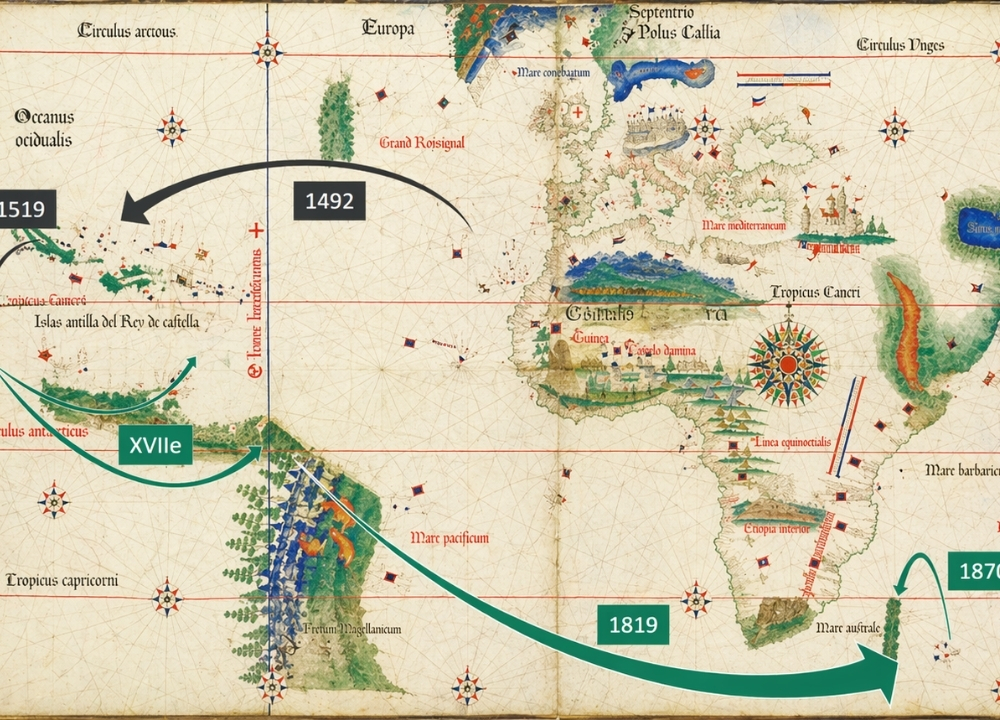
Tracing the history of vanilla means following the journey of a tropical vine, Vanilla planifolia, from the forests of Mesoamerica...
At Eurovanille, we use cookies to give you the best possible experience on our website: smoother navigation, anonymous statistics, personalised content and social media features.
You can accept, decline or customise cookies at any time.