Guide

Vanilla or vanillin: what the word really covers

Natural vanilla, fermentation-derived vanillin, synthetic vanillin: the same molecule does not cover the same products. The differences lie in regulatory frameworks, production processes and the economics that shape the global vanilla flavor market.

One molecule, three production routes

Whatever its origin, vanillin is chemically identical. What changes is how it is obtained, and what that origin then allows in terms of naming and positioning.

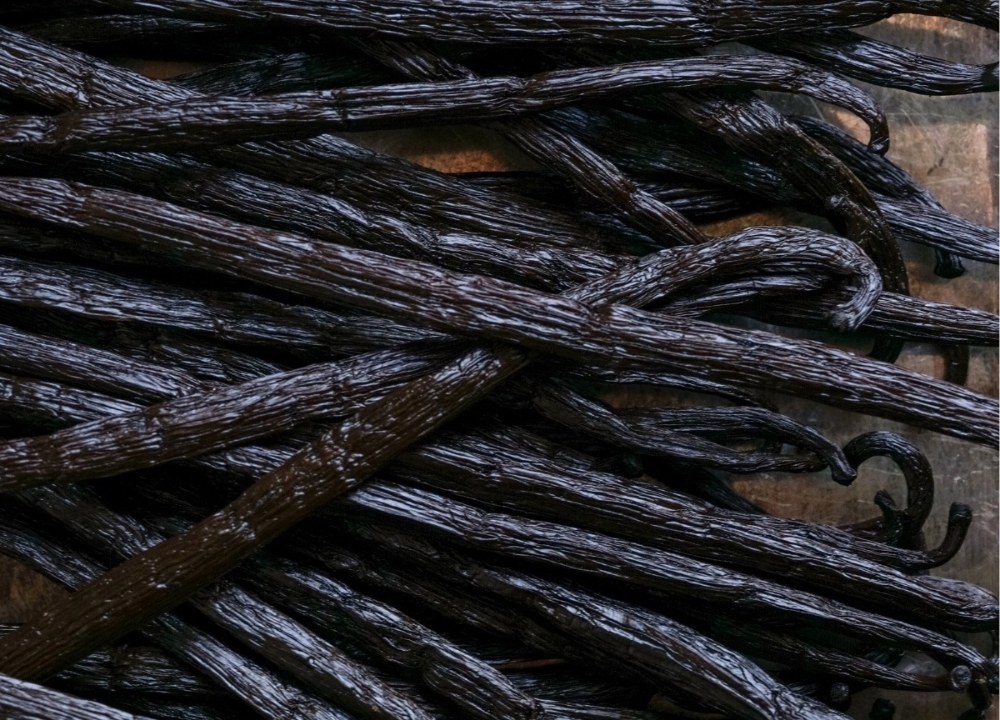
  • From the bean, it is part of a complex aromatic whole and accounts on average for only 1.5 to 2% of the bean. It is the sensory benchmark, but it remains available in limited quantities and subject to variability linked to climate, maturity and curing methods.
  • Synthetic vanillin, produced by chemical synthesis, appeared as early as the late 19th century to meet a demand far exceeding what natural vanilla could supply. Very low cost, high availability, a simple and reproducible profile, but no aromatic complexity, a negative image among consumers and incompatibility with organic and strict clean label approaches.
  • Fermentation-derived vanillin, obtained through biotechnology from plant substrates such as ferulic acid, answers the search for solutions of more natural origin: a renewable raw material, the status of a natural flavouring substance under Regulation (EC) No 1334/2008 (EU) and of a natural flavor under 21 CFR 101.22(a)(3) (US), and controlled industrial production.
Icon: three vanilla beans.
VANILLA BEAN1.5–2% vanillin
Icon: droplets, plant substrate and microorganisms, representing fermentation.
FERMENTATIONplant substrates (ferulic acid)
+ microorganisms
Icon: structural formula of vanillin.
SYNTHESISchemical route,
no aromatic complexity
One molecule, three production routes. Source: Eurovanille White Paper on Vanilla 2026, chapter 5. © Eurovanille

What EU regulation says

In the European Union, flavourings are governed by Regulation (EC) No 1334/2008. A flavouring is defined there as a product not intended to be consumed as such, which is added to food in order to impart or modify odor and/or taste.

Natural flavouring substance: obtained by physical, enzymatic or microbiological processes.

Natural flavouring: made up exclusively of natural flavouring substances and/or flavouring preparations.

Natural vanilla flavouring: a name requiring at least 95% of the flavooring component to come from vanilla.

Flavouring (synthetic): obtained by chemical synthesis.

The distinction therefore rests not only on origin but also on the production method, which strongly influences consumer perception and the positioning of the finished product.

Why it matters for export

The EU categories have no strict equivalent elsewhere. In the United States, the line between names rests on other criteria, notably bean equivalent and alcohol content, which leads to counterintuitive situations: a product fully compliant in Europe may not be able to carry the same name on the US market.

What the White Paper adds

  • The EU / US comparison table of product names, with line-by-line equivalences and quantified thresholds: page 31.
  • The production processes in detail and their impact on the final aroma profile.

Blog

Recent Articles

Stay up to date with the latest from Eurovanille and share our love of exceptional vanilla!

  • All Posts
  • Agronomy R&D
  • CSR
  • Innovation
  • Tips & Advice
  • Trade Shows